Search more about Pets & Animals

The word "animal" comes from the Latin word animale, neuter of animalis, and is derived from anima, meaning vital breath or soul. In everyday colloquial usage, the word usually refers to non-human animals. The biological definition of the word refers to all members of the Kingdom Animalia. Therefore, when the word "animal" is used in a biological context, humans are included.
Follow Me on Twitter.. https://twitter.com/AnimalSmile

Share Friends About Animals of our Planet

Share |

ClownFish/Clown Anemonefish

Posted by WishbonE at 12:45 AM

Monday, May 19, 2008

ClownFish/Clown Anemonefish

Clown fish (also called the Clown Anemonefish) are small fish that live among anemone (fish-eating animals that look like undersea flowers and have hundreds of poisonous tentacles). The anemone's tentacles kill other fish that touch them, but the Clown fish seems to be immune to its poison. Scientists think that the Clown fish may be coated with a mucous that protects it from the poison. The anemone protects the Clown fish from most predators, who know not to go near the anemone's tentacles. The clown fish helps the anemone by cleaning it (as it eats detritus) and perhaps by scaring away predators of the anemone.

The clownfish is a type of fish that lives in salt water habitats. It is also called an Anemonefish. Clownfish are typically very bright, orange fish that have three white stripes, one at the head, middle and tail. If you look really closely, you may notice that there are thin black lines around the white stripes. Also, the tips of their fins have a thin black rounded stripe.
Clownfish can grow to be from 2 to 5 inches long. The males tend to be significantly smaller than the females. However, there are various types of clownfish that range in colours from blue to yellow.

Clownfish live in a "symbiotic" relationship with certain anemones. This means they benefit from living with the sea anemone, and the sea anemone benefits from the presence of the clownfish. They are the only fish that are able to live in sea anemones and not get stung by their tentacles. Clownfish are very active fish and are extremely aggressive. Because they are quite active, the clownfish are thought to be "clowning around". They defend their territory and the sea anemone that they live in. Clownfish eat the leftovers from fish on the anemone and algae. The leftovers include copepods, isopods and zooplankton.

The clownfish is best known for its ability to come in contact with the stinging tentacles of the sea anemone, and not be harmed. Not only are the clownfish not harmed by the anemone, they live among the sea anemone and use its tentacles as protection from enemies. The clownfish also feed the anemone by leaving waste that is left behind in its tentacles, or actually gathering the food. This is a perfect example of symbiosis, which is defined as being different species of the animal kingdom living off of each other.

The exciting thing about studying this fish is that it comes in so many different sizes and brilliant colors. There seem to be hundreds of different markings and color combinations. It definitely makes it an eye-catching exhibit. Another thing that uniquely stands out is the active and aggressive nature of the fish. When watching them, it is definitely easy to see how they get their name. Looping through the waving hands of the anemone, they play tag with each other with seemingly endless energy.

The spawning season of the clownfish, a time when they breed, is year round in tropical waters. Males attract the females by courting. Courting behaviours include chasing, biting and extending fins. Clownfish lay their eggs in batches on coral, rock or next to the sea anemone that they call home. The male clownfish will build a nest on the rock or coral near the anemone in order to be provided with protection from predators. Breeding starts by the male chasing the female to the nest where the eggs are released. One hundred to one thousand eggs are laid. The male clownfish guards and protects the eggs until they hatch. They hatch within 4 to 5 days. Clownfish have a few ocean predators, but their greatest threat is humans. People who catch clownfish and keep them as pets in aquariums are making a mistake. There are only ten out of more than one thousand types of anemone that are able to host these fish. Many people put the fish in a tank with the wrong anemone. In captivity, the clownfish can live from 3 to 5 years. In the wild, they live 6 to 10 years.

In a group of clownfish, there is a strict hierarchy of dominance. The largest and most aggressive female is found at the top. Only two clownfish, a male and a female, in a group reproduce through external fertilization. The clownfish are hermaphrodites, meaning that they develop into males first, and when they mature, they become females. Also, as mentioned earlier, more than one clownfish is able to live in a sea anemone. If the female clownfish is removed from the group, such as by death, one of the largest and most dominant males would become a female. The rest of the remaining males will move up a rank on the hierarchy.

This fish eat the anemone's leftovers. It waits until the anemone paralyzes and eats a fish, then helps itself to bits that the anemone leaves uneaten. It also eats dead anemone tentacles and plankton.

About Guinea Pig or Cavy/Cuy

Posted by WishbonE at 12:26 AM

Tuesday, May 13, 2008

About Guinea Pig or Cavy/Cuy

Guinea Pigs are mammals which belong to the rodent family having large incisor teeth that are continually growing necessitating gnawing to prevent the teeth from overgrowing. The word 'rodent' is derived from the latin word 'rodere' which means 'to gnaw'.

Guinea Pigs form the Family Caviidae which is broken down into different Genera and then Species. There are 8 species of guinea pigs but only one is widely kept as a pet.

Guinea Pigs have a compact body and no tail and are native to South America where they live in burrows in mountain and grassland areas

The Guinea pig (also commonly called the cavy after its scientific name) is a species of rodent belonging to the family Caviidae and the genus Cavia. Despite their common name, these animals are not pigs, nor do they come from Guinea. They are native to the Andes, and while no longer extant in the wild, they are closely related to several species that are commonly found in the grassy plains and plateaus of the region. The guinea pig plays an important role in the folk culture of many indigenous South American groups, especially as a food source, but also in folk medicine and in community religious ceremonies. Since the 1960s, efforts have been made to increase consumption of the animal outside South America.

In Western societies, the guinea pig has enjoyed widespread popularity as a household pet since its introduction by European traders in the 16th century. Their docile nature, their responsiveness to handling and feeding, and the relative ease of caring for them, continue to make the guinea pig a popular pet. Organizations devoted to competitive breeding of guinea pigs have been formed worldwide, and many specialized breeds of guinea pig, with varying coat colors and compositions, are cultivated by breeders.

Guinea pig is also used as a metaphor in English for a subject of experimentation; this usage became common in the first half of the 20th century. Biological experimentation on guinea pigs has been carried out since the 17th century; the animals were frequently used as a model organism in the 19th and 20th centuries, but have since been largely replaced by other rodents such as mice and rats. They are still used in research, primarily as models for human medical conditions such as juvenile diabetes, tuberculosis, scurvy, and pregnancy complications.

Guinea pigs are large for rodents, weighing between 700 and 1200g (1.5-2.5 pounds), and measuring between 20 and 25cm (8–10 inches) in length. They typically live an average of four to five years, but may live as long as eight years. According to the 2006 Guinness Book of Records the longest living guinea pig survived 14 years, 10.5 months.

Food
Grass is the guinea pig's natural diet. Their molars are particularly suited for grinding plant matter, and grow continuously throughout the animal's life. Most grass-eating mammals are quite large and have a long digestive tract; while guinea pigs have much longer colons than most rodents, they must also supplement their diet by coprophagy, the eating of their own feces.
Guinea pigs benefit from feeding on fresh grass hay, such as timothy hay, in addition to food pellets which are often based from timothy. Alfalfa is also a popular food choice; most guinea pigs will eat large amounts of alfalfa when offered it, though there exists some controversy over the feeding of alfalfa to adult guinea pigs. Some pet owners and veterinary organizations have advised that, as a legume rather than a grass hay, alfalfa consumed in large amounts may lead to obesity, as well as bladder stones due to excess calcium, in any but pregnant and very young guinea pigs.

Health
Common ailments in domestic guinea pigs include respiratory infections, diarrhea, scurvy (vitamin C deficiency, typically characterized by sluggishness), abscesses due to infection (often in the neck, due to hay embedded in the throat, or from external scratches), and infections by lice, mites or fungus.
Mange mites (Trixacarus caviae) are a common cause of hair loss, and other symptoms may also include excessive scratching, unusually aggressive behavior when touched (due to pain), and, in some instances, seizures. Guinea pigs may also suffer from "running lice" (Gliricola porcelli), a small white insect which can be seen moving through the hair; the eggs of these lice, which appear as black or white specks attached to the hair, are sometimes referred to as "static lice". Giving a bath with neem oil soap is a gentle and effective way of ridding the pig of lice. Other causes of hair loss can be due to hormonal upsets caused by underlying medical conditions such as ovarian cysts.

As Pets
A guinea pig can be one of the most endearing and wonderful pets. They may live as long as 9 years (the average is 5 to 7), so the decision to bring one into your home must be made carefully.

If handled correctly early in their life, guinea pigs become amenable to being picked up and carried, and seldom bite or scratch. They are timid explorers, and rarely attempt to escape from their cages, even when an opportunity presents itself. Guinea pigs who become familiar with their owner will whistle on the owner's approach; they will also learn to whistle in response to the rustling of plastic bags or the opening of refrigerator doors, where their food is stored.
Domesticated guinea pigs come in many breeds, which have been developed since their introduction to Europe and North America. These varieties vary in hair and color composition. The most common varieties found in pet stores are the English shorthair (also known as the American), which have a short, smooth coat, and the Abyssinian, whose coat is ruffled with cowlicks, or rosettes. Also popular among breeders are the Peruvian and the Sheltie (or Silkie), both straight longhair breeds, and the Texel, a curly longhair.
Cavy Clubs and Associations dedicated to the showing and breeding of guinea pigs have been established worldwide. The American Cavy Breeders Association, an adjunct to the American Rabbit Breeders Association, is the governing body in the United States and Canada. The British Cavy Council governs cavy clubs in the United Kingdom. Similar organizations exist in Australia (Australian National Cavy Council) and New Zealand (New Zealand Cavy Club). Each club publishes its own Standard of Perfection and determines which breeds are eligible for showing.


About Dogs

Posted by WishbonE at 7:48 PM

Tuesday, August 28, 2007

Scientific Name Canis lapus familiaris or Dogs, a domestic mammal subspecies of the wolf, one of the most widely-kept working and companion animal to human, the man’s best friend. The first animal on our planet who enter space and fly into Earth’s orbit. The word Dog in common usage refers to the domesticv pet dog, a reclassified as a subspecies of the gray wolf, Canis lupus. "Dog" is sometimes used to refer collectively to any mammal belonging to the dog family Canidae such as wolves, foxes, and coyotes.
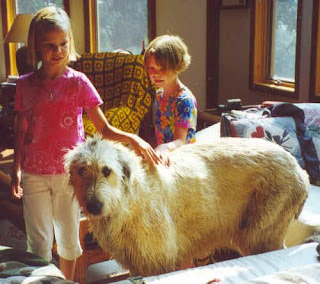
The English word dog might derive from the Old English docga meaning "powerful breed of canine", while the word hound is a cognate of German Hund, Dutch hond, common Scandinavian hund, Icelandic hundur which, though referring to a specific breed in English, means "dog" in general in the other Germanic languages.
In breeding circles, a male canine is referred to as a dog, while a female canine is called a bitch. The father of a litter is called the sire, and the mother of a litter is called the dam. Offspring are generally called pups or puppies until they are about a year old. A group of offspring is a litter. The process of birth is whelping.
Dogs are very social animals, but their personality and behavior vary with breed as well as how they are treated by their owners and others who come in contact with them. It is not uncommon for dogs to attack humans and other animals; however, this is usually because of lack of care or improper upbringing by its owner.

  • Livestock guardian dogs exhibit the controlled characteristics of hunting dogs. Members of this group, such as Border Collies, Belgian Malinois, and German Shepherds use tactics of hunter and prey to intimidate and keep control of herds and flocks. Their natural instinct to bring down an animal under their charge is muted by training. Other members of the group, including Welsh Corgis, Canna dogs, and Cattle dogs herd with a more aggressive demeanor and make use of body design to elude the defences of their charges.
  • Gun dog breeds used in hunting—that is, pointers, setters, spaniels, as retrievers —have an intermediate degree of paedomorphism; they are at the point where they share in the pack's hunting behavior, but are still in a junior role, not participating in the actual attack. They identify potential prey and freeze into immobility, for instance, but refrain from then stalking the prey as an adult predator would do next; this results in the "pointing" behavior for which such dogs are bred. Similarly, they seize dead or wounded prey and bring it back to the "pack", even though they did not attack it themselves, that is, "retrieving" behavior. Their physical characteristics are closer to that of the mature wild canine than the sheepdog breeds, but they typically do not have erect ears, etc.
  • Scenthounds maintain an intermediate body type and behavior pattern that causes them to actually pursue prey by tracking their scent, but tend to refrain from actual individual attacks in favor of vocally summoning the pack leaders (in this case, humans) to do the job. They often have a characteristic vocalization called a bay. Some examples are the Beagle, Bloodhound, Basset Hound, Coonhound, Dachshund, Fox Hound, Otter Hound, and Harrier.
  • Sighthounds, who pursue and attack perceived prey on sight, maintain the mature canine size and some features, such as narrow chest and lean bodies, but have largely lost the erect ears of the wolf and thick double layered coats. Some examples are the Afghan, Borzoi, Saluki, Sloughi, Pharaoh Hound, Azawakh, Whippet, and Greyhound.
  • Mastiff-types are large dogs, both tall and massive with barrel-like chests, large bones, and thick skulls. They have traditionally been bred for war, protection, and guardian work.
  • Bulldog-types are medium sized dogs bred for combat against both wild and domesticated animals. These dogs have a massive, square skull and large bones with an extremely muscular build and broad shoulders.
  • Terriers similarly have adult aggressive behavior, famously coupled with a lack of juvenile submission, and display correspondingly adult physical features such as erect ears, although many breeds have also been selected for size and sometimes dwarfed legs to enable them to pursue prey in their burrows.
Dogs are valued for their intelligence. This intelligence is expressed differently with different breeds and individuals, however. Being highly adaptable animals themselves, dogs have learned to do many jobs as required by humans over the generations. Dogs are employed in various roles across the globe, proving invaluable assets in areas such as search-and-rescue; law enforcement (including attack dogs, sniffer dogs and tracking dogs); guards for livestock, people or property; herding; Arctic exploration sled-pullers; guiding the blind and acting as a pair of ears for the deaf; assisting with hunting, and a great many other roles which they may be trained to assume. Most dogs rarely have to deal with complex tasks and are unlikely to learn relatively complicated unaided. Some dogs are specially trained to recognize and avoid dangerous situations.
Dog’s Sight - like most mammals, dogs are dichromats and have color vision equivalent to red-green color blindness in humans. Different breeds of dogs have different eye shapes and dimensions, and they also have different retina configurations. Dogs with long noses have a "visual streak" which runs across the width of the retina and gives them a very wide field of excellent vision, while those with short noses have an "area centralis" — a central patch with up to three times the density of nerve endings as the visual streak — giving them detailed sight much more like a human's.
Dog’s Hearing - Dogs detect sounds as low as the 16 to 20 Hz frequency range (compared to 20 to 70 Hz for humans) and above 45 kHz (compared to 13 to 20 kHz for humans), and in addition have a degree of ear mobility that helps them to rapidly pinpoint the exact location of a sound. Eighteen or more muscles can tilt, rotate and raise or lower a dog's ear. Additionally, a dog can identify a sound's location much faster than a human can, as well as hear sounds up to four times the distance that humans are able to. Those with more natural ear shapes, like those of wild canids like the fox, generally hear better than those with the floppier ears of many domesticated species.
Dog’s Smelling - Dogs have nearly 220 million smell-sensitive cells over an area about the size of a pocket handkerchief. Some breeds have been selectively bred for excellence in detecting scents, even compared to their canine brethren. What information a dog actually detects when he is scenting is not perfectly understood; although once a matter of debate, it now seems to be well established that dogs can distinguish two different types of scents when trailing, an air scent from some person or thing that has recently passed by, as well as a ground scent that remains detectable for a much longer period.

About Cats: Domestic Cat or House Cat

Posted by WishbonE at 8:17 PM

Thursday, August 23, 2007

Add caption


Scientific name Felis Silvestris Catus or Cats small carnivorous mammal species, a skilled predator, can learn to manipulate simple mechanisms and can be trained on simple commands. Cats often valued by humans as companion and by their abilities to hunt vermin such as insects, fests and over 1,000 other species. The temperament of a Cat can vary depending on the breed and socialization. Cats with "oriental" body types tend to be thinner and more active, while Cats that have a "cobby" body type tend to be heavier and less active. Domestic Cats, especially young kittens, are known for their love of play. This behavior mimics hunting and is important in helping kittens learn to stalk, capture and kill prey. On defense or danger, cat specifically targeted the eyes of the larger Animal with some accuracy.

Cats use a variety of vocalizations and types of body language, for communication, including mewing ("meow" or "miaow"), purring, hissing, growling, squeaking, chirping, clicking and grunting. Cats conserve energy by sleeping more than most Animals, especially as they grow older. Daily durations of sleep vary, usually 12–16 hours, with 13–14 being the average. Some Cats can sleep as much as 20 hours in a 24-hour period. Unlike Dogs and most Mammals, Cats walk by moving both legs on one side and then both legs on the other. On reproduction, multiple males will be attracted to a female in heat. The males will fight over her, and the victor wins the right to mate. At first, the female will reject the male. But eventually, the female will allow the male to mate. The female will give a loud yowl as the male pulls out of her. After mating, the female will give herself a thorough wash. If a male attempts to breed with her at this point, the female will attack him. Once the female is done grooming, the cycle will repeat.
Their normal body temperature is between 38 and 39 °C (101 and 102.2 °F). A Cat is considered febrile if it has a temperature of 39.5 °C (103 °F) or greater, or hypothermic if less than 37.5 °C (100 °F). For comparison, Humans have a normal temperature of approximately 36.8 °C (98.6 °F). The liver of a Cat is less effective at detoxification than those of other Animals, including Humans and Dogs; therefore exposure to many common substances considered safe for households may be dangerous to them. In general, the Cat's environment should be examined for the presence of such toxins and the problem corrected or alleviated as much as possible; in addition, where sudden or prolonged serious illness without obvious cause is observed, the possibility of toxicity must be considered, and the veterinarian informed of any such substances to which the Cat may have had access. Cats are known for their fastidious cleanliness. They groom themselves by licking their fur, employing their hooked papillae and saliva. Their saliva is a powerful cleaning agent, but it can provoke allergic reactions in Humans.

Cats can see almost as well as humans can, and at times better. Cat vision is designed for detecting motion, useful for hunting. Like humans, cats have binocular vision, although not as well tuned as in humans. This means a cat most likely sees in 3-D; very useful for judging distance.
Cats have an elliptical pupil which opens & closes much faster than round types and allows for a much larger pupil size. This allows more light to enter the eye.
Cats appear to be slightly nearsighted, which would suggest their vision is tailored more for closer objects, such as prey, that they can capture within running distance. Objects farther than several hundred yards rarely interest a cat.
A cat relies on its extremely sensitive hearing and directional ear movement to locate the general location of prey, then targets and captures the prey using its keen eyesight. Cat vision is adapted to capture even the slightest movement. This makes the cat one of the most successful hunters on land.

Recent Comments

Articles and Contents Republishing Policy

This blog provides articles and information about pets and animals. Readers, publishers and visitors are allowed to share, republish or reprint articles or partial contents found in this blog and should kindly follow the following terms and conditions;
  • You should also provide free access to the articles or contents and should be sold at any manner.
  • Upon copying/re-publishing, you should also include a reference to the author and the site.
  • You should provide direct link/s to the certain page or homepage of the site.
  • When translating to other language and republishing any contents from this site, the above terms should also be observed.
  • For any other concerns about republishing, please email the author at pet.safe2@gmail.com
Here's the code for link Reference upon republication:

It should be look like this: Animal articles courtesy of http://about-animals-planet.blogspot.com.